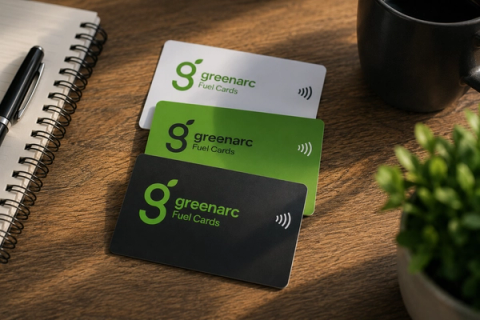
What Is a Fuel Card and How Does It Work?
Learn what a business fuel card is, how it works and how it can improve purchasing control, reporting and fleet administration. Discover what to consider when choosing the right fuel card with Greenarc.

Managing fuel across several drivers and vehicles can quickly become complicated. Paper receipts go missing, expenses need reconciling and it can be difficult to see exactly where your money is being spent.
A business fuel card can make this process easier to manage. It provides an alternative to cash, personal bank cards and traditional company credit cards while giving your business greater visibility and control over fuel purchases.
But what is a fuel card, how does it work and how do you choose the right one for your fleet?
What is a fuel card?
A fuel card is a payment and control tool designed for business fuel and, depending on the product, other fleet-related purchases.
It usually looks and works like a payment card. Your business provides cards to its drivers or assigns them to particular vehicles. Drivers then use the cards at participating fuel stations rather than paying with cash or claiming the cost back through expenses.
The transactions are recorded centrally and brought together into an invoice or reporting system. This can help your business monitor fuel expenditure without relying on individual receipts and separate expense claims.
Fuel cards are not all the same. Their accepted locations, available fuels, purchasing permissions, payment arrangements and reporting features can vary. Finding the right card therefore depends on how your vehicles actually operate.
How does a fuel card work?
The precise process will depend on the card and account setup, but most business fuel cards work in a similar way.
1. Your business selects a fuel card
The first step is choosing a card that fits your fleet. Important considerations include:
The number and type of vehicles you operate
Whether your journeys are local, regional, national or motorway-led
The fuel or energy types your vehicles require
The locations and networks your drivers regularly use
Whether you need HGV-friendly facilities
Your purchasing-control and reporting requirements
For example, a small van fleet operating locally may have very different requirements from a haulage company running HGVs between depots.
2. Cards are issued to drivers or vehicles
Depending on the chosen setup, each card may be connected to a driver, a vehicle or another identifiable part of your fleet.
This makes it easier to organise transactions and understand who is purchasing fuel. Businesses may also be able to set purchasing restrictions, although the available controls will depend on the specific card and account.
3. Drivers refuel at participating sites
Drivers present the fuel card when paying at an accepted location. They may also be asked to provide information such as a registration number, driver ID or current mileage.
Every fuel-card network has its own coverage. A large network is only valuable when its locations match the routes your drivers actually travel. Before selecting a card, it is sensible to check the sites, postcodes and roads that matter to your operation.
4. Transactions are recorded centrally
Instead of handling a separate cash receipt or expense claim after every fuel purchase, transactions can be recorded against the business account.
This gives fleet managers clearer visibility of purchasing activity across drivers and vehicles. It can also make it easier to identify unusual transactions or areas that need further investigation.
5. The business receives consolidated information
Fuel-card transactions can be combined into centralised invoices and account reports, depending on the product and setup.
This can reduce the need to chase drivers for paper receipts, simplify reconciliation and support clearer VAT record-keeping. Payment terms and invoicing schedules will vary, so these should always be confirmed before an account is opened.
What are the potential benefits of using a fuel card?
The right fuel card can turn a collection of individual driver expenses into a more structured fleet-management process.
Less paperwork
When drivers pay with cash or general payment cards, finance teams may need to collect, check and reconcile numerous receipts. Centralised fuel-card invoices can reduce this administrative burden and make transaction records easier to manage.
Greater visibility of fuel spending
Fuel cards can provide a clearer view of how much fuel is being purchased, where transactions take place and which drivers or vehicles are involved.
This information can help fleet managers monitor expenditure, investigate exceptions and make better-informed operational decisions.
More control over purchases
Depending on the card and account configuration, businesses may be able to control where cards are used and which products can be purchased.
These controls can help separate legitimate fleet expenditure from unrelated purchases. Exact restrictions should always be checked for the chosen card.
Easier invoice management
Combining transactions into fewer invoices can make fuel expenditure easier to process. It may also support VAT administration by providing more consistent transaction records.
A network matched to your routes
Different fuel cards provide access to different networks. The right option should give your drivers convenient access to suitable locations without creating unnecessary detours.
For HGV fleets, this may mean considering access for larger vehicles, strategic routes and products such as diesel or AdBlue. For mixed or electric fleets, it could involve comparing traditional fuel access with business EV-charging options.
Are fuel cards only suitable for large fleets?
No. Fuel cards can potentially support businesses with fleets of many different sizes.
A small business may still benefit if it regularly deals with fuel receipts, needs better visibility or wants clearer purchasing controls. However, a fuel card should always be proportionate to the amount of fuel and administration involved.
Before making a recommendation, it is worth reviewing:
How many vehicles and drivers the business operates
How frequently fuel is purchased
How receipts and invoices are currently processed
Which controls or reports would be useful
Whether the available network fits the fleet’s routes
The right question is not simply whether a business is large enough. It is whether a fuel card would make its fuel purchasing easier to manage.
Will a fuel card always be cheaper than pump prices?
Not necessarily. A fuel card should not be selected solely on the assumption that it will always beat the visible pump price.
The most useful comparison considers the total operating picture: where drivers refuel, whether they need to take detours, how receipts and VAT records are handled, which controls are required and how much administration the current process creates.
Pricing arrangements can also vary between cards and providers. Any rates, account charges, surcharges and payment terms should be clearly understood before making a decision.
How do you choose the right fuel card?
There is no single fuel card that is best for every business. The right choice depends on the relationship between your vehicles, routes, fuel requirements and operational priorities.
Before choosing, ask:
Where do our drivers refuel most often?
Do we need local, motorway, national or HGV-specific coverage?
Do we use petrol, diesel, AdBlue, EV charging or a combination?
What purchasing controls do we require?
How do we want transactions and invoices to be reported?
Are our fleet requirements likely to change?
Do we have sustainability or electrification goals?
Checking these points can help avoid choosing a card based on a headline price or national coverage figure that does not reflect how the fleet actually operates.
How Greenarc can help
Greenarc takes a fleet-fit approach to fuel cards. We consider your vehicle types, operating routes, preferred networks, purchasing controls, reporting needs, administrative workload and sustainability plans before recommending an appropriate solution.
Our aim is not simply to supply a card. It is to help make fuel purchasing clearer, easier to control and better aligned with the day-to-day needs of your business.
Whether you operate a few local vans, a national commercial fleet, HGVs or a combination of fuel and electric vehicles, Greenarc can help you compare the available options.
Driven by insight, powered by partnership.
Ready to find the right fuel card for your business? Speak to the Greenarc team for a fleet and route review.