HGV Brake Testing: Are You Meeting the Requirements?
Are you meeting HGV brake testing requirements? We explore what fleet operators need to know about laden testing, safety inspections and maintenance records.
Keeping commercial vehicles safe and roadworthy is a key responsibility for fleet operators. While regular maintenance and annual MOT tests are essential, brake testing is an area where operators need to ensure they're meeting the required standards.
Recent guidance highlighted by the Road Haulage Association (RHA) has brought attention to some common misunderstandings around brake testing, particularly when it comes to laden testing, safety inspections and record keeping.
So, what should fleet operators be aware of?
Why Is Regular Brake Testing Important?
An HGV's braking system is one of its most important safety features. Ensuring it operates effectively isn't just about passing an annual MOT; it's about maintaining vehicle safety throughout the year.
According to the DVSA's Guide to Maintaining Roadworthiness, operators must have appropriate maintenance arrangements in place to ensure vehicles remain safe and roadworthy.
This includes assessing brake performance as part of the vehicle's preventative maintenance programme.
Simply inspecting brake components visually isn't always enough. While visual checks can identify wear, damage or leaks, they may not reveal problems affecting overall braking performance.
Understanding Brake Testing Requirements
Brake performance should be assessed at every safety inspection.
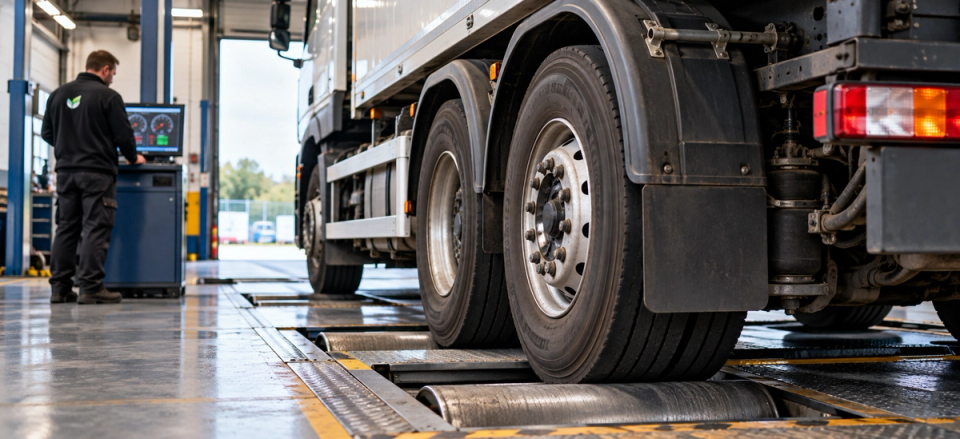
The preferred method is a calibrated roller brake tester (RBT), although suitable electronic braking performance monitoring systems (EBPMS) or approved decelerometer testing may also be used where appropriate.
Where EBPMS isn't being used, DVSA guidance expects at least four laden brake tests spread throughout the year, with the annual MOT test counting as one of these.
The key point is that brake testing should form part of an ongoing maintenance programme, rather than being treated as an annual exercise.
Laden vs Unladen Brake Testing
One of the areas highlighted by the RHA is the importance of carrying out brake tests under suitable loading conditions.
Testing an HGV or trailer without sufficient weight can produce results that don't accurately reflect its braking performance.
DVSA guidance advises that vehicles should ideally be loaded to at least 65% of their maximum permitted weight when undergoing a laden roller brake test.
Where this isn't practical, operators should consider alternative assessment methods and maintain appropriate records explaining their approach.
An unladen test shouldn't automatically be treated as an equivalent replacement for a laden assessment.
Don't Ignore Brake Test Reports
Carrying out a brake test is only part of the process. Understanding the results and taking appropriate action is equally important.
Brake test reports can highlight potential issues that require further investigation, even when a vehicle achieves an overall pass.
These may include:
Significant differences in braking performance between wheels.
Low braking effort from individual wheels.
Warnings relating to insufficient vehicle loading.
Results that indicate potential problems with the braking system.
Operators should ensure reports are reviewed by someone who understands the results and that any necessary corrective action is documented.
A pass result doesn't automatically mean there are no issues requiring attention.
Keeping Accurate Maintenance Records
Good record keeping is an essential part of demonstrating that a fleet is being maintained correctly.
Brake test results should be linked to the relevant vehicle safety inspection records, alongside details of any defects identified and corrective work completed.
Operators should also ensure that maintenance records are retained for the required period.
DVSA guidance requires safety inspection and maintenance records to be kept for at least 15 months.
Having a clear record of inspections, testing and repairs helps operators demonstrate that vehicle safety is being managed consistently.
Making Brake Testing Part of Your Fleet Maintenance Strategy
For fleet managers, the key takeaway is that brake testing shouldn't be viewed as a standalone compliance exercise.
It should be incorporated into a wider preventative maintenance programme that includes regular inspections, appropriate testing and clear documentation.
Reviewing existing processes can help identify potential gaps and ensure that vehicles remain safe and roadworthy throughout the year.
Ultimately, effective brake testing is about more than passing an MOT. It's about demonstrating that your fleet is being maintained safely and consistently.
Further Reading
For more detailed information about brake testing requirements and operator responsibilities, visit:
Road Haulage Association – Brake Testing: Are You Still Questioning the Requirements?
GOV.UK – Guide to Maintaining Roadworthiness
This article provides general information. Fleet operators should always refer to the latest DVSA guidance when reviewing their maintenance and compliance procedures.